11.23.09
Posted in Fandom Tags: Claymore, Death Note, fans on fans, Gundam SEED, Hayate the Combat Butler, One Piece, preferences, The Sacred Blacksmith, The Story of Saiunkoku, Toradora, とらドラ!, クレイモア, デスノート, ハヤテのごとく!, ワンピース, 彩雲国物語, 機動戦士ガンダムSEED, 聖剣の刀鍛冶 at 9:25 am by reversethieves
This week we look at the characters we hate and once again ask you the readers decide if that it means anything about Narutaki and I. It is often said that what we hate the most in others in what we hate about ourselves. Does the fact extend to anime characters we hate? Do the characters that get under our skin the most provide some insight into our psyche? Does it tell us something different then what the characters we like or are they merely opposite sides of the same coin?
If there is one thing the internet has enough of, it is hate. Hate for shows, hate for people, and plenty of hate for characters. Unfortunately, we will be spreading such ire today. What would our former post be without its companion piece? However, I would like to point out this post isn’t about bad characters or poorly written development, it is about characters we dislike for inherent flaws in their personalities. I would even argue, if I can passionately oppose a character that means they are actually written rather fully. Once again we are trying to explore what, if anything, it means to dislike a character with such fervor. This, much differently from the previous post, can get a bit hairy and quite intense at times. But we will do our best to be respectful. Maybe.
Read the rest of this entry »
Permalink
05.06.09
Posted in Events, Live Action, Reviews Tags: bad, Death Note, L Change the WorLd, live action adaptions of manga, movie, デスノート at 7:03 am by reversethieves

SPOILERS, SPOILERS. TRUST ME YOU DON’T CARE.
Since it went over so well last time, we saw the film at the same place we watched the second Death Note movie. Once again not too crowded, though more so than when we went the other time. I didn’t go into this movie with many expectations, I had heard and read a bit about it before hand. Though frankly it would be hard for me NOT to go see a movie all about L. So with only mild hopes I braced myself for this film. Somehow the reviews didn’t do the movie justice. It was much worse than I could have imagined, it may have physically injured me at points. The only thing that prevented me from plain giving up on it was that I committed myself to writing this review! How dare you film, how dare you make me write a word against L!
W.C. Fields said, “Never work with animals or children.” L, or should I say Kenichi Matsuyama, should have listened to him. The fact an L movie was being made was hardly a surprise to anyone. He was clearly the most popular character hands down. They had the prefect place to add in one last hurrah before his ultimate end. When I first heard about the movie I was cautiously optimistic. L has to solve his last case against terrorists with a super plague having only a few days left to live. Sounds fine. Then I heard it was a stupid action movie. I was fine with that. Although L was almost always playing mental games in the manga, they also made a big deal that he was amazingly physically fit and even a martial arts master. I thought that people went into the movie expecting another mind game but got a cheesy action movie and were overly harsh. No they were overly generous. Everything that could make a movie bad was bad in this lemon of a movie. When my favorite original character was a vehicle you know you are in trouble. And before you ask it was not a cool talking car.

Read the rest of this entry »
Permalink
02.09.09
Posted in Anime Tags: analysis, Berserk, Bleach, Claymore, Cowboy Bebop, Death Note, Eureka 7, Evangelion, Full Metal Alchemist, G Gundam, Gundam, Gundam 00, Gundam SEED, Gundam Seed Destiny, Gundam Wing, Gurren Lagann, Jojo's Bizarre Adventure, Kekkaishi, Macross, Magic Knight Rayearth, Nadesico, Rurouni Kenshin, spoilers, Story of Saiunkoku, Trigun, Twelve Kingdoms, るろうに剣心―明治剣客浪漫譚―, カウボーイビバップ, クレイモア, ジョジョの奇妙な冒険 ファントム ブラッド, デスノート, トライガン, ファーストガンダム, ブリーチ, ベルセルク, 交響詩篇 エウレカセブン, 十二国記, 天元突破グレンラガン, 彩雲国物語, 新世紀エヴァンゲリオン, 新機動戦記ガンダムW, 機動戦士ガンダム00, 機動戦士ガンダムSEED DESTINY, 機動戦士ガンダムSEED , 機動戦艦ナデシコ, 機動武闘伝Gガンダム, 結界師, 超時空要塞マクロス, 鋼の錬金術師, 魔法騎士[マジックナイト]レイアース at 7:50 am by reversethieves

This is obviously going to be filled with spoilers. Series: Cowboy Bebop, Macross, Gundam, G Gundam, Gundam Wing, Gundam Seed, Gundam Seed Destiny, Gundam 00, Death Note, Gurren Lagann, Trigun, Nadesico, Full Metal Alchemist, Bleach, Magic Knight Rayearth, Berserk, Jojo’s Bizarre Adventure, Claymore, Evangelion, Eureka 7, Kekkaishi, Story of Saiunkoku, Rurouni Kenshin, Twelve Kingdoms.
Sometimes characters die in anime. Sometimes characters you have grown to love die in anime. Sometimes character you have grown to hate die as well. This was always one of the selling points people brought up on how Japanese cartoons were different than American cartoons. Anime was supposed to have greater maturity and greater suspense because anyone could die. People could tell that there was something different about Robotech when Roy Fokker died. People loved Roy and then he was gone. Roy was truly gone and it effected the viewers who were not used to it. But are such powerful deaths the norm or an anomaly in anime?
What I thought about anime when I first encountered it, among other things, was that it held an element of surprise. Knowing a character that you have traveled the length of a story with could be killed kept you on your toes. It is not wholly unknown in American entertainment, but at the same time they love to fake you out. Movies, television, and comic books love the affectionately named soap-opera death. It is used so frequently that I, along with countless others, can’t believe a character is gone without a body and even then sometimes they aren’t really gone! Anime does this too, however we have all actually seen them kill a favorite character at some point, it makes the odds different. And it honestly made me love and appreciate a good death scene. Heck, I look forward to such moments not because I want to see them go but because it can be a crowning moment for a character.
While I have to agree that many an anime is willing to kill off characters how effective it is can be another story. Sometimes when a character dies it can be shocking, heartbreaking, or even amazing. It makes the narrative more real and unpredictable. It is an organic part of the story that moves the audience with genuine emotion. Other times it’s nothing more than a cheap way of trying to manipulate the audience. Death in anime can be little else than killing someone as a crass attempt to pull at the heartstrings or to invoke sympathy for a character who never warranted any beforehand.
A good death hinges on good characterization. A character doesn’t have to be around for a long time in order to make you feel the weight of their demise. Some deaths can effect you on multiple levels as well. You yourself might feel a great sadness to see a character go or you might feel the resonance of their death to the characters left behind. But once again this is about creating a connection and a bond between the audience and the story. The ability to write a good death separates the boys from the men.
“You gotta carry that weight” hangs on the screen for a few seconds and then it sinks in that Spike is in fact dead. Spike’s death has a tremendous emotional resonance on the viewer and on the series itself. The whole series builds slowly builds to Spike’s final moments. Spike’s death is a classic scene of anime that in many ways defines how Cowboy Bebop is remembered. This a the perfect example of how to do a death in an anime correctly. It is hard hitting and poignant. It sticks with the viewer and enhances the show. Even if Spike’s death was preordained it is still quite resonate with the viewer.
Spike’s death was a crowning moment in storytelling. Even knowing everything you did watching up to that point, it was still an unbelievable few minutes. You thought, “No, he’ll get up.” You thought, “Someone will come at the last moment.” Or a number of other things. And then after you accepted it you really felt it. We were on a journey with Spike that ended with definite finality. Whether or not anime has no qualms with killing characters, it is still rare to see the death of the main character. It forces you to admit that the adventure is over. Cowboy Bebop was amazing for a lot of reasons not the least of which was the unforgettable loss of Spike Spiegel.
There are many categorizations of death, let’s take the mentor death like when Roy Fokker dies leaving behind his student to take up his mantle. Roy Fokker’s death is just as hard hitting. His forthright charm made him one of the most popular characters in the series because he was so easy going yet still so badass. His final meal that he never gets to taste of became a famous meme for the death of a character and even comes up in Macross Frontier. Will A. Zeppeli’s death in the Phantom Blood section of JoJo’s Bizarre Adventure was just as epic. He dies saving Jonathan Joestar going into the battle knowing that he was destined to die then but has no hesitation in doing so. He also gives his remaining life energy to Jonathan so he can defeat Dio Brando. He is one of the first well done noble sacrifices in a series know for both its high body count of named characters and quality deaths of main characters. The mentor character often has to die to let his student become his own man. It can also give the protagonist an even stronger reason to fight, be it for revenge or his desire to make his mentor proud.
The mentor death is universally popular, it can be seen in many places including Star Wars, Harry Potter, and The Lion King. It forces our young hero to embark on the journey with more responsibility than they may be ready for. Kamina’s death came as a shocking blow, to the cast and the viewer, in Gurren Lagann. He was a gung-ho, manly manic of energy! Not only did he constantly push everyone against the odds, he didn’t believe odds existed! And his death was made of manly passion. Kamina wore who he was on the outside and you couldn’t help but be fond of the guy. His death pushes Simon towards things they wouldn’t have occurred had he always been in Kamina’s shadow. Theresa’s death in Claymore seemed inevitable since we were in flashback mode, but nevertheless Theresa proved herself to be smart, resourceful, brave, powerful, and human in our brief stint with her. Everyone mourned her death as Clare did. So their deaths are tragic, and as the audience we may truly not want to see them go, but their sacrifices are essential to the movement of the hero.
There is also the death of the beloved side character. Kittan death is the other famous one from Gurren Lagann. His noble sacrifice recalls elements of Kamina’s death yet is its own noble passing. After his battle with Chapel, Wolfwood knows he is mortally wounded and goes in front of the alter to confess in his last moments. He tries to come to peace with his life but is unable to do so. I remember thinking that some sort of miracle would occur in the next episode and Wolfwood would somehow not be dead. To many viewers this was a much the climax of the series as Vash’s fight with Knives. Then there is Maes Hughes. He was a popular comedic character known for his over the top declarations of love for his wife and super-proud-love of his daughter. I remember reading on a forum about a girl being teased my her mother when she cried after Huges died. I also remember people saying they dropped Full Metal Alchemist after Hughes died.
A side character can be more than the sum of his screen time, they can come to mean just as much to the audience as their heroic counter-parts. Perhaps sometimes we see ourselves more in the side role or maybe they display lovable characteristics that the lead lacks. Whatever the case, many the mourning of a side character goes to show that the length of an acquaintance has little to do with the impact of it. Gai Daigoji is an incredibly well-known and still mentioned side character from a series that had a passing moment in the limelight, Martian Successor Nadesico. He had all the manly robot passion one could muster! He was us, the people who dream of piloting giant robots. And his death was surprising and sad. The utter massacre of the Band of the Hawk in Berserk was many things including disturbing, heart-wrenching, and unforgettable. Goodbye lovable Pippin, farewell good-natured Judeau, au voir Guts’ arm! Gen’s selfless demise in Kekkaishi came as quite a shock. The slow friendship between him and Yoshimori enhanced that and to him lose his friend so quickly was very hard. Gen wasn’t an easy guy to get along with but we had come to understand him and to accept him. Maybe we don’t feel destroyed at the thought of our own demise but to lose your best buddy, a comrade, brings many emotions to the surface.
Tomoe Yukishiro was only introduced in the first set of OAVs for Rurouni Kenshin after the TV series had ended but her death was powerful and a defining moment for Kenshin’s character. While her phony marriage to Kenshin had helped him regain much of his humanity, it was her death that solidified his vow never to kill again. We slowly get to know Tomoe and her secrets so that when she finally makes her sacrifice to save Kenshin it not only has the emotional impact of a character who feel for but also shows us why everything what lead up to the TV series. We see why Kenshin loved her and why her death had a profound effect on everything he does after that.
The death of a lover can be a catapult for a character to begin a journey whether it be of self-reflection or the pursuit of revenge. They are quite often heart-wrenching and sometimes senseless and as with any important death make us look back on what had come before it. Speaking of heart-wrenching Kaji’s death in Evangelion was just that. Not that Evangelion was much of an upper in the end. But his seemingly devil-may-care attitude made it all the more devastating. And when Misato listens to that phone call you want to fall apart in just the same way. Her pain was my own.
Even if they were villains I don’t think anyone who watched Eureka Seven was not effected by the deaths of Charles and Ray Beams. There deaths start the second half of Eureka Seven in a profoundly depressing and shocking way yet very effectively. After watching Renton bonds with Charles and Ray they essentially become his loving, goofy foster parents for several episodes. Their deaths are as powerful as the deaths of any protagonist in the show. Both Charles and Ray die in a gruesome manner. Despite them dying opposing the crew of the Gekkostate, you cannot help but feel for them. But it’s just like Holland says, there could have been no other way.
The death of a villain can mark the end of a series in a monumental way. In many instance we have followed the journey of the villain and learned about what makes them tick just as we have our warriors. It is possible to get just as attached to the antagonist and mourn them just as you would anyone else. While I thought the later half of the Magic Knight Rayearth anime had problems, Zagato’s death and reasoning behind his destruction of Cephiro is wonderfully tragic. A villain who can love deeply is very gray and his defeat makes you question which would you choose. A final battle is epic, it is what all the roads are leading to but sometimes it is hard to see the story end.
Gundam is famous for often being a bloody and brutal series. The original series director, Yoshiyuki Tomino, gained his nickname Kill ‘Em All partially due to his work on the original season. Tomino kills the two most popular characters in the Universal Century time line in their final battle. Considering how insanely popular Char and Amuro were this is no casual decision. He also killed off large percentages of the cast in almost every other Universal Century series. Characters could die heroically defending their ideals just as easily as dying pointlessly. The Gundam franchise has continued the tradition by making sure you never know when a character will die. Lockon’s death in Gundam 00 was so surprising because they faked you out. You assume in the back of your mind that he was protected because they would not kill him so soon after almost killing him. But two episodes later he dies. Lockon’s death was so powerful because he was easily the most likable of the Gundam meisters. Even the goofy G Gundam is able to turn the death of Domon’s traitorous mentor, Master Asia, into an epic manly death.
Gundam uses the many ranges of death from beloved side character to hero. Obviously they are killed with varying degrees of importance to the audience. Lockon’s death was a really difficult blow because you had to go through the anguish twice! They left you hanging just enough to believe he was dead the first go around, then when they finally kill him you think it is another fake out. In Gundam Seed, Mu La Flaga’s death was all the things it should have been. He went out defending the Archangel and a woman he loved. Mu was a minor character that made his way into the memories of the audience. Seeing his helmet floating there in space was sad indeed. Of course this awesome piece of emotional work was destroyed by reediting the footage and bringing him back in Gundam Seed Destiny. And who could forget the elegant villain from Gundam Wing, Treize Khushrenada. He was intelligent, clam, rational, and persuasive he could almost make you believe anything he said. He was also brilliant strategist and lethal in the combat. And he didn’t even die without having a hand in it. Gundam has made a business of giving us character deaths across the board and many to great effect.
Just as a epic death can make a series, a lame death can derail a series just as quickly. It can take what was supposed to be a dramatic scene and turn it into comedy. How many times have you seen this scenario? A character is introduced suddenly then we quickly learn a good deal about him unlike any other character we have previously met. Maybe we learn that he has family waiting for him or a pretty girlfriend. Then later in the episode he is killed usually in a major battle. This scenario is supposed to show the horrors of war or battle. I remember toastyfrog aka Jeremy Parish mentioning the perfect example of this back in the day. In Record of Lodoss War, Parn meets a random young soldier before a major battle between the forces of light and dark for the fate of the land. The young soldier tells Parn about his family at home and his young daughter who gave him a locket. After the bloody battle Parn finds the soldier’s body and the locket. We are supposed to feel horrible for this young man. Really you just see him as some random schulp who was destined to die the minute he whipped out the locket.
It became a running gag in Tower of Druaga. Random characters that started talking about getting married when they got home were going to the chopping block. The other version of this is to take a background or side character and suddenly start giving us way more story than ever before. In some attempt at making us connected to them and to make it seem like the creator isn’t afraid to rid the canvas of characters. These attempts are mostly transparent and completely forgettable until someone on a forum starts talking about how no one dies in such and such series. These are cheap ploys and they rarely work because connecting with a character isn’t simply knowing their back story. After experience really well done deaths, you start to pick up on poorly done ones.
One of the most recent famously hated deaths was L from Death Note. People who liked Light kept with the show but L fans were devastated. Many had been reading the series assuming/hoping that L was the main character. I know many a person who gave up on Death Note with the passing of L. Then again not killing anyone isn’t necessarily any better. A show where battles are supposed to be tense and exciting can be drained of their energy if there is no chance of death. Bleach is good example. How many people who were not minor allies or throwaway villains have actually died? With all the battles it seems like no one can bite it in Bleach. Momo looked like she was dead as a doornail when Aizen runs her through but it turns out that she was just merely seriously injured. Chad and Renji should both be taking dirt naps but are still around and Rukia is not much better. Also Tite Kubo keeps adding characters while not removing any leading to many characters not getting developed but still sticking around.
Shonen fighting shows are variable in their love of fake death and their willingness to actually kill characters. People in Saint Seiya are constantly getting punch in the heart, like through the skin and directly on the heart, but survive! Dragonball Z is notorious for characters dying 2, 3, 4 times and constantly being resurrected. On the other hand, Naruto seems perfectly willing to kill off the older generation. Maybe I like a good death because it ensures that the characters go out on a noteworthy, memorable scene instead of thinking they will fade into obscurity and die of old age one day. Does anyone really want to see a hero go out that way?
In the end what makes a good death and a bad death comes down to two factors. Did you ever really care about the character who is dying? And was their death significant to the story? If you never had any connection to the character then the death means nothing. People die everyday but it is so commonplace that you would go insane if you mourned for everyone who died in real life. In some series people die all the time. You can’t feel bad for everyone who dies in Legend of the Galactic Heroes. The creator’s hope is that you care about the few characters whose death is meaningful. No one wants those deaths top serve as plot filler or tedious melodrama. A valiant sacrifice or a brave last stand always works well. Dying to finish a mission or expend a little more energy to push something or someone else ahead can also be dramatically effective. Even a random seemingly pointless death can be strong if it is done in a way to support the narrative as opposed to exploiting it. It just has to be done for a higher reason.
Top 5 Characters I was glad to see die
5. Sivil (Macross 7), damn she is still alive. King of Kou (Twelve Kingdoms)
4. Rau Le Creuset (Gundam SEED)
3. Light Yagami/Misa Amane (Death Note)
2. Sakujun Sa (Story of Saiunkoku)
1. Flay Alister (Gundam SEED)
*When making comments, please use a spoiler alert with the name of the series you will be spoiling if we haven’t mentioned it in this post!
Permalink
11.17.08
Posted in Events, Live Action, Reviews Tags: Death Note, Last Name, movie, デスノート at 10:47 am by reversethieves

With the love-love that is nigh palpable from Narutaki, there was no way were going to miss the big screen showing of the second Death Note movie. Instead of going to the theater in Union Square we went to Clearview’s Chelsea which was significantly less crowded. If they continue to get anime movies at that theater, I think I will go there from now on. It was a nice place and they had an awesome waffle shop across the street. I myself had some good chai bubble tea. There was a closed shop called Burgers and Cupcakes which I am sure could have been saved by Narutaki if only he knew of its existence before.
Wow, what a big difference between two theaters that are just a few blocks from each other. Our experience at Union Square, while not sold out, was still packed and we were stuck with crummy seats. This was a whole other story, sadly there were only about 10 to 15 people besides us at the screening. However, compared to the number of people in total at this theater that night, that doesn’t seem like bad numbers. The theater was really nice and clean, I will definitely be picking this place over Union Square.
The first Death Note movie ended with L and Light meeting face to face for the first time. The second movie then takes the remaining books and and combines them into 1 movie. This means a whole bunch of extraneous characters, plot lines, and one very controversial plot point got the ax. We get a greater disparity between the movies and the manga than the first movie. I know this leads to some rather strong opinions towards either the manga or the movies.

While the first movie was different from the manga, it still kept some of the major plot lines and interwove them just a bit differently. The second movie starts pushing it in a very different direction. Where the manga stumbles through some of its shifting plot, the movie removes altogether. Afterall, there is only this one movie to wrap up the story so inevitably a lot of things will go missing. To create a solid ending for a series like this in just 2 hours was a challenge that was handled really well.

The movie begins with Misa Misa gaining her own Death Note and becoming the second Kira. L tries to prove that Light is in fact Kira while also trying to catch the second Kira. Light is as always trying to kill L and mold the world to his vision. The plot then follows the manga in a condensed manner up until the Yotsuba Arc. We get a thankfully short version of the arc and deals with one other new Kira. Of course, no Death Note adaptation would be complete without the most infamous line in the series, “exactly as planned.”
The cast carries over from the first film and that is much to its credit. These actors, especially Kenichi Matsuyama, really brought great things to these characters in the first film and continue at the same pace here. You read an in-depth view in our review of the first movie. But we have a few new additions to discuss, namely Misa Amane, Rem, and Kiyomi Takada. Misa starts off our tale and follows rather closesly to her path. Light proves how easily he can manipulate women though never to the misogynistic extent of the manga. Kiyomi is sort of a mish-mash of characters from the manga. She helps exhibit that desire for power present in Light but not seen in Misa. I thought she did an excellent job portraying how easily one can fall into it. The character also solidified my feelings that Light, while a genius, doesn’t have ideals that are new or even unique.
The original Kiyomi Takada from the manga was Light’s girlfriend in college that eventually becomes Kira’s mouth piece as a news announcer. In the movie she is an aspiring news anchor who is a closet Kira supporter. She eventually becomes more involved with the Death Note due to Light’s schemes. Kiyomi Takada works fine in her role. I can’t say that she was extraordinarily gripping but I don’t think she was supposed to be. She is supposed to be a person who feels she has grand designs but really just has very petty schemes especially compared to the machinations of Light and L. Misa Misa is now is now fully integrated into the movie so her full force of annoying is apparent but thankfully has a shortened appearance. Less Misa Misa is always better. Rem is generally the same as she was in the manga but they never make note that Rem is in fact female.

The dub as per the first film makes people giggle at inopportune times. Though Ryuk didn’t seem nearly as out of control. Once again we talked a bit about this in the first film review. Everyone basically stays on target. Though I always miss not hearing Kenichi’s voice just because I like him so much.
I don’t really think about dubs anymore being a subtitle person. I don’t hate them but I just don’t think I pay attention. Therefore someone has to stand out as being really good or really bad for me to notice. The Death Note dub did not have anyone standing out for better or worse. I, like Narutaki, did notice that people were sometimes laughing at the wrong times but it was not anything that negatively effected my viewing experience. Then again I wonder if I really notice anyone being anything other than extraordinary for better or worse in Japanese.
Well, thank goodness someone realized how crappy the extras for the first movie were. They certainly stepped it up a notch with this release and had the actors talking about their roles and working together. It also had some fun scenes of each one performing their final lines for the film and then being given flowers!
I also think the directors insights into the movie were a little more interesting because he was doing more than simply adapting the manga. He was making it his own. It was interesting to see what all the principal actors thought of their roles.

A lot of things about this shorter version appealed to me. Biggest of which was the intensity, the manga became so enormous that it couldn’t hold on to that edge. It started to become too sensational, but with the movie you stayed glued exactly as long as a person can. L also always stays a focus, as he should. He is the perfect foil to Kira and the only one suitable for this life or death game with Light. Plus, strangely, I don’t have enough time to hate Misa in the movie because she is never there for any exorbitant amount of time bumbling things. And if you couldn’t guess it has the ending as I always wanted it.
The Death Note movies are the definitive version of Death Note for me. The second movie takes the best of the middle and end of the manga and condenses it into a climatic ending. The director has the ability to use 20/20 hindsight and take the best while tossing away the chaff. I felt the manga went on for far too long due to its popularity and lost much of its focus in the middle. The movies also have the ending that I feel a majority of fans wanted from the start. I know it has the ending I much prefer. You could say they basically ended up in the same place but I feel both conclusions leave a different taste in your mouth.

Top 5 L quirks
5. No shoes
4. Great tennis player
3. How he holds a phone
2. Making pastry shish-kebabs
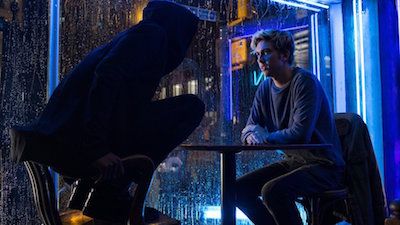
1. Crouched sitting position
Permalink